Kay's Picks

    ↓ WHY I USE iHerb ↓


    Wonderful Readers!

    NETWORK READERS

Friday, February 25, 2011

DEBI PEARL'S 2ND BOOK ON CHILD SAFETY: SARAH SUE LEARNS TO YELL AND TELL

Bookmark and Share
A children's book about how to stay safe from predators isn't the first choice on most parent's shopping list. We want our children to remain innocent and not live in fear. Isn't part of protecting them shielding them from information about predators?

At first, it sounds reasonable to avoid unpleasant topics with our children. Then I recall how we learned fun rhymes and songs to reinforce safety lessons when I was a child. I can remember being taught how to cross a street LONG before I was ever allowed to cross by myself. Someone decided that knowing how to stop, drop and roll if my clothing caught fire was vital to my well-being . . . . just in case. We weren't allowed to play with matches, but a big talking bear reminded us that only WE could prevent forest fires. We didn't even live near a forest!


That's why I'm so glad to see a children's book that does this same thing. SARA SUE LEARNS TO YELL AND TELL promotes a positive message to children that there are things they can do to stay safe. Without being graphic or going into lurid details, this book encourages children that are approached to immediately alert someone. Debi Pearl's latest children's book gives little ones confidence that God is on their side and there IS something they can do. It's comforting to tell children that there IS a way to respond and they CAN tell someone who will listen.

SARA SUE LEARNS TO YELL AND TELL is a book that reinforces safety for children growing up in today's world. Decades ago, the dangers were different. Today, human trafficking and child predators are common. These hunters hide in plain sight, and they know how to target vulnerable children.

Debi's book helps me remind my children of the ways they can avoid looking like an easy target. Reading SARA SUE with them opens up a dialogue so that they know it's safe to come to me and talk about these issues. The rhyming verse and colorful images are both appealing and entertaining for children. The helps in the back of the book are an encouragement to parents that we needn't be afraid, just prepared.

I'm very grateful that this grandmother took the time to not just teach these lessons to her own family, but that she has reached out to help keep other children safe as well.


Click the button to order:


SARA SUE LEARNS TO YELL AND TELL can be a lifeline to children that don't know how to respond to threats. Senator Scott Brown describes what happened to him as a child.

read more “DEBI PEARL'S 2ND BOOK ON CHILD SAFETY: SARAH SUE LEARNS TO YELL AND TELL”

Tuesday, January 11, 2011

DEBRIS HUT BASICS

Bookmark and Share
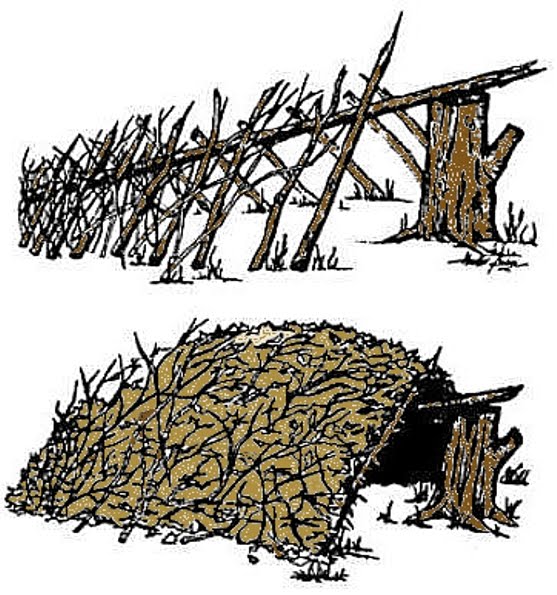
A debris hut is a structure constructed of found materials that can include leaf matter, branches, grasses and even snow. The insulated walls shield a person from cold and weather, serving as a combination sleeping bag and shelter. Using natural resources, a debris hut can be assembled in nearly any location. These can be used as an emergency shelter or a temporary shelter while you work to secure a more permanent structure.

While advanced skills are not required, experience and a good work ethic can be invaluable. A good training exercise is to construct a model from small sticks to get a good idea of what will be required for a full scale shelter. Another good idea is to build a full sized model using a time limit. In a survival situation, you may be limited by how much daylight is left in your day. Having a time limit will help you prioritize and work efficiently. Spending the night in your creation will quickly tell you which elements were lacking such as location, size, insulation, waterproofing, door construction, or bedding.

When deciding where to locate your debris hut, it is best to select an area that is a safe distance away from water sources. These could flood or dampen your shelter. Check the wind direction and position the entrance away from the prevailing wind. An open area that receives optimum sunlight surrounded by a stand of trees acting as a wind break is ideal. Keep the entrance small to help retain heat. A small fire at the entrance of your shelter will help keep you dry and warm.

When constructing a debris hut, smaller is better. This saves on construction time, materials needed and the smaller space is easier for you to warm with only body heat. Make it large enough for you to wiggle into feet first. To size the structure, lie on the ground and mark the outline of your body.

It is good to gather more material than you think you will need as the walls should be as thick as your arm’s length. Straight tree branches with leaves removed can be pounded into the ground to form your basic frame. A common method is to construct an A-frame for the entrance. This can be lashed together to form a support for the ridge pole and additional branches can be propped against the ridge pole to form the ribbing of the frame. On top of this, the debris is piled and woven to insulate and waterproof the shelter. If you have some thick plastic sheeting, use it to help waterproof your hut.

Every survival circumstance has unpredictable variables. Within these variables the human body needs to be protected from a loss of warmth that can lead to death. Knowing how to make a debris hut can truly be a lifesaver. Make a game of it and see what sort of structure you are able to construct from the things you find in your own backyard. Take the time to visit a wilderness area near your home and practice working as a group to build a structure. Once you’ve slept in your creation, you will know if there are things that need to be reworked. These fun activities can give you invaluable experience in the event of an emergency.


Dave Canterbury demonstrates how to construct a type of debris hut called a spider shelter in this short video.


The Wendell family demonstrates how a woman was able to construct her own debris shelter and overnight comfortably with her children in the structure.


read more “DEBRIS HUT BASICS”

Thursday, December 9, 2010

GUIDELINES FOR VOLCANO SAFETY

Bookmark and Share
It is best for people that live near a volcano to make plans for an eruption. Learn the alert levels issued by your local emergency management office and know what they mean. Listen for emergency updates and instructions, making note of information about hazards you may encounter. Prepare for a possible evacuation. Make additional preparations to shelter in place.

A volcanic eruption can alter the landscape in ways that are difficult to imagine. Near the site, there can be loss of life, and destruction of structures and property. The resulting ash cloud can cause airports to shut down and turn daylight to darkness. Earthquakes, flash floods, wildfires, thunderstorms and tsunamis can all occur as the result of a volcanic eruption.

Memorize the recommended evacuation routes. Maps marked with this route should be kept in each car and another in your home. Select maps with detailed geographical markings of the area surrounding your location. In the United States, hazard zone maps can be secured from the U.S. Geological Survey that will show probable lava flow paths and give time estimates on travel to certain locations along with their relative safety.

Prepare a getaway kit. Include safety goggles and dust masks or bandannas to protect your eyes and lungs from falling ash. Include long sleeved shirts, long pants and sturdy footwear. Keep a well-stocked first aid kit, blankets and warm clothing in a convenient location. With this, keep a battery-powered radio and fresh batteries so that you can still monitor alerts if your power goes out.

Unless you need to evacuate, stay indoors. Bring pets inside and move livestock into shelters. Close all vents, doors and windows for protection from ash and burning cinders. Put damp towels under doorways. Cover downspouts, machinery, electronic devices and computers to protect them from ash that can disable and clog machinery and pipes.

Listen for creaking noises from your roof. Ash will fall silently and can cause the roof to collapse under its weight. Remember to wear a mask and goggles if you go outside to clear ash off of the roof and gutters. Remove your clothing before re-entering the house rather than bring ash inside where it can irritate the airways of everyone indoors.

Keep at least three days worth of water and food in your home. An eruption can contaminate water supplies and you may have to rely upon what you have stored. If you hear that an eruption is imminent, fill all sinks, tubs and containers with water. Rely upon your stored water until your regular source is deemed safe.

If you must drive, use your headlights, proceed slowly at about 35 mph and watch your gauges for signs of an overheating engine. Ash can clog your radiator and other moving parts of an engine. Ash will also make roads slippery. When parked, cover your vehicle with a tarp and place it under a shelter to protect it from the falling ash.

If you must evacuate, turn electricity and gas off at the mains before you leave. Head for higher ground and try to stay upwind so that ash and gases are blown away from you. Volcanoes’ greatest dangers (lava flows, mudflows, poison gases and flooding) all move towards low-lying areas. An elevated area gives you greater protection than any attempt to outdistance the danger.

Afterwards, don’t return home until authorities say it’s safe to re-enter the area. Seek medical treatment for any injuries. The wait for medical treatment will be shorter for those farther away from the disaster site. When cleaning up property after an eruption, dampen the ash before sweeping or shoveling the buildup. This keeps the slippery substance from getting tossed back into the air.

Remember, in the event of an eruption, you may have only moments to react. Being prepared to move quickly and decisively can mean the difference between life and death.


This 4 minute video shows the extent of the destruction
caused by the eruption of Mount St. Helens.


This 17 second video shows Mount St. Helens
erupting in slow motion.

The entire side of the mountain slides to one side.

read more “GUIDELINES FOR VOLCANO SAFETY”

Tuesday, November 23, 2010

DANGERS DURING A VOLCANO

Bookmark and Share
A volcano is a mountain that opens downward to a reservoir of molten rock. When pressure from gases and melted rock becomes strong enough, the mountain erupts in an explosion that spews gases and rocks through the opening. Volcanic blasts can devastate miles of landscape within hours or minutes. Here are some of the things to watch for during a volcanic eruption.

An ASH CLOUD can turn day to night and prevent you from being able to recognize landmarks, coating everything it touches with a dark powder. It is made up of bits of glass and exploded rocks made under extreme temperatures. This corrosive substance does not dissolve and can damage mucus membranes, irritating skin and eyes. Infants and those with breathing problems are most at risk of injury from this. Cover your eyes, nose and mouth.

FALLING ROCKS (pyroclastics) can land miles away from the volcano. Place a ridge line between yourself and the volcano or hold something (backpack, box, trash can lid, your arms etc.) over your head for protection.

FIRES occur wherever burning debris lands onto tinder, spreading quickly.

FLOODING & MUDSLIDES kill more people than the initial blast. Even miles away, these are a danger as normal waterways are clogged or changed by the lava flow, ash and debris.

HEAT is also released with temperatures high enough to burn human flesh. Move away from the blast area to avoid this.

LAVA FLOWS are super-heated molten liquid. Nothing can stop them. Don’t attempt to cross them even if they appear cooled. This could be a thin crust that will give away under your weight. Never try to cross hot spots, mud holes or geysers as the ground surrounding them can be too thin to keep you out of the molten lava below.

POISON GAS and volcanic smog (vog) is the result of sulfur dioxide and other pollutants reacting with oxygen, moisture and sunlight. It can cause lung damage, breathing difficulties, headaches and death. Use a respirator, mask or moist cloth and get away from the area as quickly as possible. DON’T KNEEL OR CRAWL!!! The most dangerous gases often accumulate near the ground.

STRONG WINDS follow an eruption and can be felt miles away from the blast, knocking over trees and structures.

If you live in the vicinity of a volcano, NOW is the time to develop a plan to deal with events in case of an eruption.


Many Indonesians died in the aftermath
of Mount Merapi's eruptions
during October & November 2010.


read more “DANGERS DURING A VOLCANO”

Wednesday, November 10, 2010

DVD REVIEW: "NAKED INTO THE WILDERNESS"

Bookmark and Share
Readers may be interested in seeing an example of how rustic skills can serve you. NAKED INTO THE WILDERNESS gives a good overview of how this is possible. It’s one thing to know how to start a fire or build a shelter, it’s quite another to know how to have a shelter, fire and food without ready-made tools. There’s another level of skill required to know how to utilize the strengths of each individual within a group, take advantage of found materials and manage the variables that weather and terrain can toss your way.

NAKED INTO THE WILDERNESS is a video that demonstrates how primitive skills can be applied in their context. To emphasize the value of each technique, the participants venture into a remote location without iron tools or containers.

Part one takes you into the Kansas woods as you observe skills in several categories. Watch as the individual participants form into a cohesive group, securing food, shelter and the tools they need to accomplish each task.

While stone tools make for a slower work pace, you'll see that a LOT can be accomplished with very few basic materials. Watching this gave me a real appreciation for some skills that modern culture seems to have left behind including:
● basket making
● pottery
● fire-starting
● cooking over an open fire,
● stone knapping to make knives, axes and arrowheads
● cordage
● shelter construction
● foraging
● trapping
● and more

The second part of the video shows another group camp that utilized modern bedrolls and pre-made primitive gear. This footage has some scenes that show how "down time" is used by members of the group to make improvements to the camp. Additionally, there are scenes that show some lighthearted moments. Day 4 contains some silliness as a couple of the guys decide to try swimming in frigid waters. If you'd prefer to pass on some back nudity, skip that section.

The DVD is divided into topical chapter headings so that you will be able to review applicable sections. If you are practicing individual skills, it helps to see them demonstrated in a real life setting -- although this is not a detailed instructional video. You'll also get a pretty good idea of how to prioritize tasks and divide the labor among individuals. NAKED INTO THE WILDERNESS leaves you with an appreciation for how a small tribe or community with few materials and some knowledge can greatly enhance the life of all its members when they are willing to work together.

This is a valuable addition to your library and will work well as a gift if you are interested in these skills for personal use or for demonstration purposes. The production value is not up to the polished standards of a professionally produced work. This is not a video on how to be rescued when lost. Rather, you’ll be invited to enjoy the home movies of experts in primitive skills and gain from their insights. In spite of surface noise distractions, dead air and the occasional “is that thing on?”, there’s a lot to glean from this footage. NAKED INTO THE WILDERNESS takes you from theory to implementation of skills you’ll need to survive in primitive conditions.


Available at Bulk Herb Store.
Click on the image to order.

read more “DVD REVIEW: "NAKED INTO THE WILDERNESS"”

Kay is . . .

a perpetual student of things I find interesting and (I hope) helpful to others. Feel free to use and apply all information with a healthy dose of common sense. :-)


Search By Category


References & FUN

CLICK THE COUPON 2 VISIT iHERB

iHerbButton

ADD KAY 2 UR LIST!

No Greater Joy!

NGJbutton