Kay's Picks

    ↓ WHY I USE iHerb ↓


    Wonderful Readers!

    NETWORK READERS

Showing posts with label application. Show all posts

Thursday, April 28, 2011

REASONS TO USE A SMALL PACK

Bookmark and Share
Articles and books on survival regularly offer lists of items should be packed for emergency travel. The overwhelming majority recommend that you pack light. There are good reasons for having few items to carry when you are on the move.

You will have to keep your pack secure. This is more difficult to do if you are encumbered with a large bag. It’s good to be strong enough to heft a good bit of weight, but if your strength is used to carry your pack, you won’t have much left to protect yourself or keep track of your possessions. Additionally, a large, heavy pack is a signal to others that you are on the move. It makes you less anonymous. This can create some difficulties.

A large pack will make it difficult for you to maneuver into and out of tight spaces. If you need to catch a ride or take public transportation, you’ll need extra space for your bag. Not every Good Samaritan has a large vehicle. You’ll not be able to take advantage of two-wheeled conveyances. A smaller pack enables you to avoid storing it in a trunk or a locker. Buses will require you to place a large pack on the roof or in the cargo compartment where you can’t keep an eye on it. You can keep a small bag on your lap and avoid extra fees for a seat to hold an oversized backpack.

If you need something out of a large pack, you may find yourself having to unpack and repack it to get the desired item. The larger your pack, the more cumbersome this process becomes. This can be dangerous if you are trying to get to your medical kit. It’s just a lot easier to have to rearrange fewer and lighter items.

A smaller pack gives you the freedom and flexibility to decide which route is best for you rather than which route you can manage with your large bag. Moderate terrain can become impassable if you must manage it with a heavy pack. Any terrain is easier to traverse with a lighter pack. Rather than use up strength and stamina carrying unnecessary weight, use it to choose the journey rather than let your pack determine your route.

Take the time to notice people outdoors who are moving with freedom. The ones that participate in the most activities have the lightest and smallest packs. Learn how to make use of multiple use items as a way to lighten your load. Information weighs nothing, and it can make a vast difference in the tools you will be able to utilize.


Sean with Silver Fox Bushcraft takes the time in this clip to show what he carries in his pack for hiking and woodland exploration.


David Wendell with Bushcraft on Fire shows how you can create your own kit without a retailed pack.

read more “REASONS TO USE A SMALL PACK”

Thursday, April 7, 2011

INTERNET SURVIVAL: PROTECTING YOUR PRIVACY

Bookmark and Share
Privacy is something that you don't realize you need until you've lost it. Here are some ways to maintain your privacy and relative safety on the internet.

You may be sharing more than just a few cute photos when you post an image on the internet. GPS enabled phones can capture images that can accurately reveal your location. All it takes is a few right clicks of a mouse for someone to copy the coordinates, paste them into Google maps and then map the shortest route to view that loved one or prized possession in person. With social network status lines, you could be revealing your CURRENT location and inviting untold numbers of strangers to join you. It’s important to be aware of this even when well-meaning family members are taking pictures of your children.

This video shows you how to disable the GPS tag on your phone photos.


This video covers some of the other dangers to revealing your location to strangers.


It is best if you don’t make public your full legal name, street address, date of birth, telephone number, or Social Security number.

If asked for your name, use initials. Scramble the letters of your name, use nicknames etc. This precaution will also give you a head's-up if you receive spam. If someone addresses you by anything other than your actual name, you will know that this is not someone you know personally.

Never make your street address public. If it is required, offer only what is necessary. Some sites only require a state or region. Adjust your security settings to keep this information private. Only make online purchases from trusted vendors as you will have to give them your address for shipping purposes.

Keep your birth date private. Sites that require your birth date often do so in order to insure you are an adult. If their security is breached, this is a key piece of personal information that someone could use to guess your social security number. Check your security settings and be sure this information is private. Consider using an online birth date that includes your birth year and an alternative month and date. Or you could use your actual month and date with the year previous or following your actual birth year. This will give the host an accurate gauge of your age without opening you up to unnecessary snooping.

Don’t reveal your home telephone number. Refrain from offering this and keep security settings private if it is included in an online profile. If someone discovers your telephone number and knows your full name and birth date, it is possible for them to use these items to add unauthorized charges to your bill.

Your social security number shouldn’t be given out unless it is absolutely necessary and to a verified financial or medical institution that you called. Always ask if you can offer an alternative number. Decline to give your number to someone that calls you.

Protect portable electronic devices with passwords. Use upper and lower case letters, numbers, and symbols. Don’t tell your device to remember your user name and password. Don’t store financial information on portable devices. Always log off when you’re finished. If your laptop or phone is lost, it’s harder for someone to access your personal information or clean out your accounts.

Internet safety is basically taking the time to cultivate good habits. Posting something on the internet is just like putting something on a very public bulletin board. The time you take now to develop these habits will protect you and your family later.

Bonus tool for readers with children:
Here’s one of my favorite tools for school aged children that want to do internet research. Make Quintura for Kids the home page on your internet browser. This search engine filters out undesirable "adult" content and reviews approved sites regularly. We’ve used it successfully at our house and recommend it to other households with children. It provides a safe way for kids to do searches without awful content and images surprising them. Try Quintura for Kids out for yourself at quinturakids.com.

Note: Quintura won’t prevent users from going to inappropriate internet addresses that they know how to get to. You’ll need another type of filtering service for that application. Check out this article for some additional suggestions for user accountability helps.
read more “INTERNET SURVIVAL: PROTECTING YOUR PRIVACY”

Saturday, August 28, 2010

HOW TO BUILD A TINDER NEST

Bookmark and Share
Other names for tinder nests are tinder bundles or bird’s nests. Your tinder nest will be used to coax a spark or ember into flame. It maximizes your chances of success in building a fire. Once the nest is burning it is used to start a larger fire.

To construct a tinder nest, select dry and flammable materials. A variety of items can be used from clothes dryer lint, fuzz from socks and sweaters, to foraged materials. Many outdoor enthusiasts carry waterproof containers filled with cotton balls dipped in petroleum jelly for this purpose. Found tinder can include dry grass, cattail fluff, cottonwood down, leaves, thin layers of tree bark, moss, wood shavings, brown leaf litter, dropped pine needles and more. A found bird’s nest will work well also.

Dry tinder will break easily when bent or crushed. If the exterior feels dry, but it gives rather than snaps when bent, the material isn’t truly dry. If the ground is damp, search out materials that are found resting on top of bushes or limbs. These items will be drier than ground litter because they have been exposed to the sun and air.

Place damp tinder inside your jacket, but not next to your skin. By the time you are ready to start a fire later in the day, the tinder will have been dried somewhat by your body heat.

Shredding the tinder creates additional surface area that will more easily catch flame. Materials that are fuzzy are ideal for feeding a spark. Gather the tinder on a bandanna or other cloth. Grab a length of tinder in both hands and move your fists in a bicycle pedaling motion. Work over the entire length of the tinder. The tinder will soften and become pliable. Bits and fine dust will fall down from your hands and be caught on the bandana.

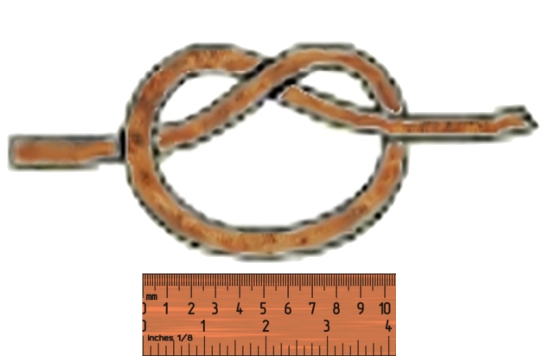
Take some of the coarse pieces of prepared tinder and create a loose over hand knot with a diameter of about four inches.

Stuff the remaining tinder into the knot’s loop. Keep stuffing the nest until it is dense. It must be able to prevent the coal from falling through the fibers and out of the nest and it must provide enough fodder to keep the spark from fizzling out before a flame starts.

Collect the dust that has fallen into your bandanna and place it in the center of the nest. It will help if you first make a small hollow or depression in the center of the nest to contain the dust. As you pick up the dust you will notice that the finest particles fall back down onto the bandanna. This will mean that you'll be packing finer and finer dust into the nest’s depression until the finest dust will be on the top, just where you'll place the spark or ember.

Once your nest is assembled, keep it in a protected area where it won’t be bumped or blown around by the wind. Then assemble the fuel for your fire and prepare to strike a spark.
read more “HOW TO BUILD A TINDER NEST”

Friday, July 2, 2010

TREATMENT FOR SWOLLEN FEET AND HANDS

Bookmark and Share
Mobility and ease of movement are greatly impeded by inflammation and swelling. In urgent circumstances, this can be dangerous. Swelling indicates that more fluids are being delivered to the area than it is possible for your lymphatic system to carry away. Rather than leave the fluids there to stretch and strain the tissues, there is a way to reduce the swelling and recuperative time.

You can create a biological pump.

Fill a bucket with icy water and another container with the warmest water you can endure. Place your swollen limb into the cold water and allow your limb to soak for several minutes. Then move the limb into the warm water soak for several minutes. Continue to do this until you are relieved of the swelling.

I have found that inexpensive foam ice chests are useful for this application as they are large enough to hold a sufficient volume of water and maintain the heat or coolness of the water over a 30 minute session (or longer). If this is not an option in a remote location, find a container that can hold warm water and move between a cold running stream and the heated container of water. You may even substitute heated rocks wrapped in an insulating cloth as your source of warmth and a frozen towel for a cold wrap.

The point is to repeatedly cool and warm the limb. The heat draws oxygenated blood to the area and relaxes the tissue. The ice shrinks the tissues and helps move fluids away from the limb. Done repeatedly, it increases the movement of fluids away from the area, promoting healing and increasing the range of motion.

You may still need some time to regain strength in the limb, especially if there has been structural damage. However the healing will progress at a faster rate when swelling and inflammation are reduced.

Of course, the primary defense against a swollen limb is to prevent its occurrence.

Poor movement mechanics and a lot of sitting can lead to a tendency towards swellings. Additionally, this can contribute to arthritis pain, poor bone density and tension in the neck, eyes, and jaw. These are common symptoms among populations that have a sedentary lifestyle with brief interludes of intense exercise. In cultures that require movement throughout the day this is not the norm. The human aging process is not naturally characterized by these symptoms.

When your feet or hands swell, it is an indication that toxins and waste material have accumulated in the area. With the regular use of your muscles, the circulatory and lymph systems can become healthy enough to flush the area free of toxins and bring nourishment to the tissues. Not using muscles means that these functions cannot be carried out as they were designed, and this makes you prone to injury and disease.

The good news is that the function and health of your body can be improved when you change your behavior with respect to the design. So, if you haven’t been utilizing muscle groups, it’s not too late to start. Your ability to take care of yourself and your loved ones is improved with physical fitness.


This guide is written for information purposes only and not meant as a substitute for skilled health care. When incorporating these methods, a reader must be informed, utilize good sense and be aware that he assumes all liability.
read more “TREATMENT FOR SWOLLEN FEET AND HANDS”

Thursday, June 24, 2010

EVALUATING CHARACTER IN A CRISIS

Bookmark and Share
When determining your options in an emergency, those who trust the all-knowing God can pray for wisdom to know the best course of action and maintain composure. Additionally, there are skills you can practice to evaluate character in a crisis.

Make mental notes of the demeanor and behaviors of anyone that attempts to take charge. Observe these things closely while discussing a topic that is not controversial. What is the tilt of the head, the posture, the position of the shoulders, arms, hands, legs and feet? How does this person stand or sit? Notice the eyes, the lines around them and the lift of the eyebrows. Notice the thickness of the upper lip and whether it suddenly becomes thinner when certain topics are broached.

Which way is the torso facing? Individuals are more likely to turn their abdomen towards someone they care for or trust. Face the person trying to persuade you and observe his stance. If he turns his shoulder towards you, this is known as giving someone the ‘cold shoulder.’ It can be an indicator that the person is uncertain of his words, or he may be hiding something. Someone who suddenly leans backwards is displaying a desire to retreat from a topic. Alternately, leaning forward during a topic can mean that the person is very interested in the subject and the person to whom they are speaking. A turn in the conversation that results in hands clasped in front can mean that the person is trying to appear smaller and retreat from the discussion.

Any change or movement away from the established baseline could indicate that you aren’t hearing the whole story.

If poor lighting prevents you from seeing, use your ears to help determine a person’s truthfulness. Listen for verbal clues that reveal the true intent.

Use of the word ‘but,’ can indicate something is hidden. Statements like, “Some people might think I’m wrong, but” raises questions about who would disagree and their reasons for doing so.

How does the person answer yes or no questions? Do you get a solid yes or no followed by an explanation? Or does the person lead with qualifications? An example might be – Question: ‘Are you telling me the truth?’ Truthful answer: ‘Yes’ or ‘No.’ A suspect answer would be: ‘I would NEVER lie to you. You know that.’

A third verbal indicator is when someone laughs when asked a serious question. ‘Are you certain this is our best course?’ followed by a chuckled ‘YES!’ is a reflexive way to cover doubts, allay fears and try to encourage the group. A more honest answer might be a sober ‘I’m as certain as I can be with my limited experience under these conditions.’ Keep in mind that a group is more easily led when a person displays confidence, so the first answer may not be a deal breaker.

A fourth verbal indicator to watch for would be the choice of words used by the individual. ‘I realize you aren’t convinced that I’m being honest with you,’ contains the phrase ‘I’m being honest with you.’ The statement, ‘I understand it’s easier for you to think that I would lie to you,’ has the phrase ‘I would lie to you.’ These are unintended keys to the truth. The first statement is likely a truthful one while the second statement is suspect.

These helps aren’t comprehensive. Used alone, they aren’t enough reason to ignore sound advice – even if it comes from a less than honest person. Like doctors delivering bad news, an individual may simply loathe to tell you the full story, believing it best not to worry you. Consider the whole picture and what you know of the character of the person before deciding whether to follow. Nevertheless, it helps to know when a person is being forthright.
read more “EVALUATING CHARACTER IN A CRISIS”

Monday, January 4, 2010

HERBS AS INCENSE

Bookmark and Share
In the past, certain herbs such as sage and rosemary were burned to cleanse sick rooms. Cedar is a fragrant wood known to have antiviral, antifungal, expectorant, and lymphatic cleansing properties. Pine, Spruce and Fir needles contain shikimic acid, the main ingredient in Tamiflu, which is used to fight the bird flu. Frankincense is also a known to be very effective incense in the treatment of respiratory ailments. Mullein and Eucalyptus leaves are also beneficial herbs that can be used in this manner.

By slowly burning herbs, the essential oils are released into the smoke and carried into the lungs of those that inhale it. If a person is suffering from bronchial inflammation, the beneficial properties of the herb are applied directly to the inflamed tissue.

I know of one woman that had been dealing with such a strong cytokine response during a bout with the flu that she was choking, vomiting and struggling for air. Her husband closed the damper on their wood stove and tossed some Cedar into the fire, filling the house with smoke. Immediately, the cytokine storm stopped. Within 20 minutes, there was no mucus and she felt as though she hadn’t had the flu at all. They have repeated this remedy with the same result on other family members, airing the house afterwards.

American Indian tribes regularly used Cedar to smoke and cleanse their homes. In rustic conditions, smoke can be used to cleanse a person, clothing, bedding or shelter of vermin, molds, etc. Cedar smoke was one of the ways that priests were instructed to cleanse a house where there had been a plague (cf. end of chapter 14 of Leviticus).

HOW TO BURN HERBS AS INCENSE
Using tongs, place a hot coal or ember from a hard wood fire onto a heatproof dish. Place the herbs onto the hot coal and allow the herbs to smolder. Inhale the resulting smoke. The goal is to encourage the plant material to produce smoke, not to ignite into an open flame. This can be accomplished by only using hot coals (rather than fire) and/or by binding the plant material into a tight bundle.

Tightly bundled herbs are called smudge sticks. Some branches, twigs or leaves are supple enough to form into tight braids. Dried leaves can be secured with twine and unbleached paper. To use a smudge stick, hold one end of it to a flame until it ignites. Then the flame is gently blown out leaving the plant material to smolder and smoke. Smudge sticks are handy as it is easy to direct the smoke and they will tend to burn for a longer period of time.


CAUTION
Do not inhale the smoke of any herb or plant material to which you have known allergies. This article is for information purposes only. Readers that incorporate these methods do so at their own risk and should utilize safety precautions. None of this information is a substitute for professional health care.
read more “HERBS AS INCENSE”

Saturday, November 14, 2009

HOW TO START A FIRE WITH A SODA CAN

Bookmark and Share
I don’t think there is a lot of nutritional value in a can of soda, but the can itself could prove useful in a survival situation. It is possible to use an empty soda can to start a fire. In the event you find yourself in need of fire for cooking or heat, a discarded can could prove most beneficial.

The concave bottom of these cans is designed to give strength to the container. It is possible to polish this surface to a high sheen to create fire. The curved reflective surface is able to collect the sun’s rays and focus them to a single point, igniting flammable tinder.

Once you’ve found an empty pop can, utilize materials you have on hand to polish it to a mirrored gloss. If you have the 0000 steel wool – the finest grade – you will be able to accomplish this with just a few minutes of rubbing. You can also burnish the surface with a baking soda paste, toothpaste or a paste made with scouring powder.


Once this is accomplished, you’ll want to finish with a polish. To polish the surface you can rub it with a bar of chocolate, crayons, candles, Vaseline, or any other waxy material. Apply the material to the bottom of the can and rub with a cloth, repeating this process until you’ve gotten the desired effect. A word of caution, don’t eat the chocolate after it is used for this project as it will have absorbed the aluminum a known toxin.

When the surface has a mirror finish, point it toward the sun. To find the focal point, hold a small scrap of paper between the can and the sun, moving it closer or farther away from the can until the sun’s rays are focused into a small dot of light. Visually mark this spot and hold your tinder there until it begins to smoke and then flame.

You will need about an hour’s time to polish the can’s surface. Igniting your tinder will take less time, depending on the quality of your materials.


This article is provided for information only. The reader assumes all risks and liability in the implementation of these methods and is urged to use common sense and sound judgment in its application.


read more “HOW TO START A FIRE WITH A SODA CAN”

Tuesday, May 5, 2009

ALTERNATIVE BUILDING MATERIALS AND METHODS

Bookmark and Share
LABOR SAVING DEVICE
A mixer is an expensive piece of equipment that will make home building less labor intensive. Whether you are using concrete, papercrete, adobe, or cob, a mixer will help the task move along much more quickly. If you are at all mechanically inclined, you may be able to find a used one and refurbish it for your own use. If not, consider making your own homemade mixer.

To make a homemade mixer you will need:
(Image courtesy: http://www.starship-enterprises.net/Papercrete/Mixer/)
* A large, galvanized tub (feed tank) mounted on a tow trailer.
* Lawn mower blade attached to the tow trailer's axle differential.

Pull the trailer behind your truck (or mule, or whatever). The movement of the axle spins the lawn mower blade and mixes your mix.

You can see an example of this mixer being used in the video that follows.

PAPERCRETE is one of several materials that can be used to create your own shelter.
YOU WILL NEED:
  • 30 pounds of concrete
  • 18 pounds joint compound
  • 1 pound boric acid (to make your home bug-proof)
  • 90 pounds recycled newspaper and/or cardboard (wet and shredded)


PAPER ADOBE is much the same as papercrete, only no concrete is used in the mixture.
  • 45 pounds waste paper
  • 120 gallons water
  • 100 pounds of clay
  • 11 shovels of sand
ADOBE
http://www.firebudd.com/adobe/
http://en.wikipedia.org/wiki/Adobe

HOW TO MAKE ADOBE BRICKS (COB MATERIAL)


ADOBE RECIPE:
From the site: http://www.zetatalk.com/shelter/tshlt04c.htm
Time required: about one month (most of it waiting for bricks to dry).
Cost: little or nothing
Materials:
  • One five-gallon bucket
  • One mixing stick or old wooden spoon
  • 1/2 bucket of adobe clay
  • 1/4 bucket of sand
  • 1/8 bucket of straw cut into two-to-three-inch pieces
  • Enough water to make a doughlike consistency
  • Six empty half-gallon waxed milk containers OR six 4 * 11 * 22 inch wooden brick molds, which can be made from 2-by-4s nailed together
  • Waterproof tape
Directions:
  • Thoroughly mix the adobe clay, sand and straw in the bucket; add only enough water to create a workable consistency
  • You can use either the wooden brick molds or the waxed 1/2 gallon milk cartons. To make the molds from the latter, cut one side from the carton (which becomes the open top of the brick mold). Cut and flatten the folded spout end and tape the carton firmly into a rectangular shape.
  • Pack the brick mixture into the cartons, filling each about tow-thirds full. IN 15 minutes to 24 hours, the brick will be firm enough to tip out. Each batch is different' you will have to judge when your mix will maintain a brick shape.
  • Place shaped bricks in a sunny location and turn repeatedly as they dry. (A completely dry brick is uniform in color, inside and out.)
MOST EXCELLENT ARTICLE on building with Adobe by J.D. Hooker can be found here. Make Adobe Bricks. Illustrations are included and a description of how the bricks are stacked into a makeshift oven and hardened by firing.

HOW TO MAKE COB/ADOBE. This video shows how cob/adobe can be made without a mechanized mixer.


COB CONSTRUCTION
One of MANY recipes for making cob:
1 part clay
2 parts sand (this keeps the finished product from cracking)
Mix thoroughly
Add just enough water to make a firm dough. A hard packed ball should not shatter when dropped to the ground from shoulder height. If it shatters, it needs more clay. If it flattens (like a pancake) it's too wet.

At this point, the mixture could be used to build an outdoor oven.

TO BUILD STRUCTURES WITH COB, you will add straw (not hay, straw) to your mix. When the mud/sand mixture is the consistency of peanut butter, add your straw. Straw allows the mix to support more of its own weight when wet. It also allows you to make wetter mud, which is easier to sculpt.

Cob Cottage Company (includes lots of pictures of cob houses)
Cob Building in the Country
See this free book online:
Cob Builders Handbook

STRAW BALE CONSTRUCTION
http://www.balewatch.com/

STRAW BALE HOUSE MADE BY SINGLE MOM FOR $50,000


STRAW BALE CONSTRUCTION, DEBUNKING THE MYTHS OF STRAWBALE


HOUSE BUILT USING VARIOUS RECLAIMED MATERIALS (MOSTLY COB).


COB AND WOOD CONSTRUCTION COMBINATION (for roundhouse) . . . also shows example of Reciprocal Frame Roof.


EARTHBAG CONSTRUCTION
To search for more information on the internet regarding this system, use the term 'earthbag' rather than 'sandbag.' If you search for 'sandbag' you will find several helpful hints on how to make your own exercise equipment, rather than how to construct a building.

The speaker on this video has a heavy accent, but I believe it is worth watching more than once to catch what he is saying. He discusses the type of bags used, how to prepare the soil, using barbed wire as a type of mortar to hold the bags in place and how to build using the bags in a staggered pattern. Note: this video does not discuss using a 'tube' system, but separate bags.


RAMMED EARTH CONSTRUCTION
http://www.diyrammedearth.com/
This method is similar to earthbag building except that there are no bags. The earth is held in place by using wooden forms.


VIDEO: John Ryan -- fun Appalachian music background


RECIPROCAL FRAME ROOF:
This type of roof helps create rooms that appear larger because they are not broken up with interior support beams.

"The reciprocal frame is a roof structure where each beam both supports and is supported by other beams in the roof structure. A minimum of 3 beams is required to create a reciprocal frame roof. As each beam supports the next in a reciprocal manner no internal support structure is required. Only the outer end of each beam requires support which will normally be a post used for the wall. The roof loads are transferred to these posts and in turn to the supporting foundation. The beams can be fabricated from timbers, laminated wood, steel or reinforced concrete. A very inexpensive roof structure can be made from logs."

RECIPROCAL FRAME ROOF
Click on the above link for more information on Reciprocal Frame Roofs. Scan down the page and click on the image of the ceiling for details which include architectural drawings.

THERMAL MASS OF NATURAL MATERIALS:
http://www.adobebuilding.com/Adobe_Building_Manual.pdf
"Adobe brick has a high thermal mass meaning that when the brick heats up, it can hold a large amount of heat and then release it slowly. In a well-designed solar passive adobe brick home, the winter sun heats the adobe bricks during the day. This heat is held in the brick and released during the night, keeping your home warm. Conversely, sun is kept off the mud brick walls during summer with strategically placed eaves and/or a verandah, allowing them to stay cool during the day and remain cool all night."

"This time course of the heat transfer is also known as the “thermal lag”. Essentially, the thermal lag is the amount of time it takes for heat to 'pass through'. The thermal lag for earth walls is around 7 to 10 hours for a one-foot (300mm) thick wall. This is ideal for most climates as mid-day heat will be released after the nighttime drop in temperature."


SHIPPING CONTAINER HOUSES
Retired train cars, cargo shipping containers, and truck bed containers are also being utilized to create low-cost housing.

Converting Steel Shipping Containers to Housing


COMBINING METHODS FOR HYBRID BUILDINGS:
Here is an example of a New Mexico house created using several different alternative techniques.
"This segment gives a quick overview of some materials used in green building, including straw bale and adobe walls, earth plaster, natural materials, passive solar heating and cooling, and much more. "


WORTH A TRY:
Alternative building materials are an abundant resource in a society where excess items are routinely disposed. It is not likely that such alternative construction will make a great impact on the environment, but these utilizing these methods WILL save you money if you are inclined to utilize them. Established homeowners can save money by creatively utilizing these methods as they maintain and develop their current property. Cob construction (and similar) methods can be used to create outdoor ovens, walkways, walls, garden benches and many other pleasant features that will increase property value.

Additional Reading:

http://www.constructionbusinessowner.com/topics/environment-and-compliance/recycling-construction-materials-an-important-part-of-the-construction-process.html


http://www.smartgrowth.org/library/resident_const_waste.html

http://activerain.com/blogsview/392846/You-Could-Build-a-House-from-Recycled-Building-Materials

http://www.greenhomebuilding.com/index.htm


This blog presents ideas and information designed to enrich the life of the reader. These articles are NO substitute for consultation with skilled professionals. The opinions and ideas expressed are fallible and that of the author. Readers are encouraged to be well-informed and draw their own conclusions.


read more “ALTERNATIVE BUILDING MATERIALS AND METHODS”

Saturday, January 31, 2009

Healing Uses For Activated Charcoal

Bookmark and Share
When storage space and resources are at a premium, Activated Charcoal proves its value by its versatility.
Ever[y] medicine cabinet should have an emergency supply of activated carbon, especially those with young children in the household. However, this is not good news for the pharmaceutical companies who have reacted by refuting some of the claims made in its favor: they have claimed that it is not effective against arsenic. If that is so, then how did Michel Bertrand survive after swallowing 5 grams of arsenic trioxide – 150 times what is regarded as the lethal dose? He did this is 1813 after mixing it with activated charcoal, just as Professor Touery was to do 18 years later with ten times the lethal dose of strychnine. [http://vitanetonline.com/forums/1/Thread/1270]
Locating Activated Charcoal
If a local retailer carries Activated Charcoal, it may be wise to stock up. A recent shopping trip revealed that this powder can no longer be purchased off of the shelf in pharmacies near my home. A local health food store only retailed the powder in capsule form. The pharmacists told me that poison control centers and the American Academy of Pediatrics had expressed reluctance to recommend this for in home use. Reasons given included liability concerns and caregiver inexperience (or ignorance) in administration.

However, this limitation also means that potentially life-saving help is delayed in emergency situations.

Whether you are able to purchase from a trusted source or must make your own, Activated Charcoal will prove useful in a number of applications. (click here for article on how to make your own charcoal).

Oral Use of Activated Charcoal
Activated Charcoal can help with mild digestive upsets, stop diarrhea, viral and bacterial infections. Activated Charcoal adsorbs toxins, renders them inert and carries them through the digestive tract. Charcoal is not metabolized or digested by the human body. It is a valuable aid in the treatment of accidental poisonings. The powder can be placed in the mouth and moistened with saliva for swallowing. It is also possible to administer it as a slurry, in crackers, or in tablet form.

Warnings:
  • Charcoal may adsorb and inactivate other medications. Do not take charcoal within two hours before or after other drugs.
  • If you are taking prescription drugs, check with your doctor before beginning treatment with charcoal.
  • You can take charcoal intermittently for long periods or regularly for up to 12 weeks.
  • Activated charcoal should NOT be used for accidental ingestion of cyanide, mineral acids, caustic alkalies, alcohol or boric acid.
[http://healingtools.tripod.com/thn5.html]


Guidelines for Oral Applications
BEFORE administering Charcoal, vomiting should be induced to bring up about 30% of the stomach contents. For the remaining 70%, Activated Charcoal should be administered. An individual should be conscious before Activated Charcoal is administered. Recommended dosage is 1/2 ounce (measure by weight) for children and 1 ounce (weight) for adults. Usual dosages are from 5 to 50 grams, dependent upon the amount of poison ingested and the body size.

Adults should receive at least 30 grams, or about half a cup of lightly packed powder. Larger doses are needed if the person has eaten a meal recently. A dost of 200 grams is not excessive in severe poisoning cases. [http://healingtools.tripod.com/thn5.html]

Activated Charcoal can be given with fruit juice, chocolate syrup, jam, honey or other liquids that help ease swallowing. Ice cream would make AC less effective and is not recommended. Dosages can be repeated every four hours or until charcoal appears in the stool. Charcoal may not work in all cases. Seek additional medical care and call the poison control hotline (if available) for recommendations specific to your circumstance.

Gas and Indigestion
Activated Charcoal adsorbs excess gas and bacteria that forms gas in the digestive tract. Diarrhea can also be relieved by taking Activated Charcoal. This can be taken in the form of tablets or a slurry (between 1 teaspoon and a tablespoon of powdered charcoal 3 times per day). This is best taken on an empty stomach for increased effectiveness.
[http://healingtools.tripod.com/thn5.html]

Slurry
Place 4 TBS of activated charcoal in a pint size jar of distilled water, shake it up to mix well, and use it as needed.

Many viral infections respond well to charcoal slurry, especially if taken within a few hours of onset. Histamine reactions to some sort of allergen, which causes sneezing, weeping eyes, coughing, sore throat, etc. also respond well to early administration of Activated Charcoal.
[http://www.buyactivatedcharcoal.com/stories_2006]

Charcoal Crackers (Biscuits)
The symptoms of ongoing digestive upsets can be greatly relieved by eating charcoal crackers (biscuits).

Cut 1/3 cup butter (or coconut oil) into two cups of plain flour flour, 1 tablespoon baking powder (aluminum free) and 1/4 teaspoon of salt. Add about 3/4 cup whole milk with (I add a couple of tablespoons yogurt to mine) until a soft dough is formed. Let this sit for as much as 7 hours, less if you are in a rush. Add 1 tablespoon of activated charcoal to the dough and mix well. Drop by tablespoonfuls onto a parchment paper lined baking sheet. Cook in a 450 degree oven for about 12 to 15 minutes. This can be eaten to help with ongoing digestive upsets.
[http://www.buyactivatedcharcoal.com/biscuits]

Dog Breath Biscuits
Even your pets can benefit from Activated Charcoal.

For your dog's bad breath, make your favorite biscuit recipe using 2 cups of flour, 1 tablespoon of activated charcoal, milk for the liquid. Add an egg, 1/2 cup mint and parsley along with butter for your oil. Bake at 400 degrees for 12-15 minutes.
[http://www.dogpatch.org/agility/FAQs/faqmis07.html]

Available in Tablet Form
Activated Charcoal tablets or capsules should NOT be used for poisons as it doesn't act as quickly as powder.
[http://www.oklahomapoison.org/general/activated.asp]

Uses for Tablets
Chew tablets and/or suck them in mouth allowing the charcoal to gradually slip down throat. This can treat a sore throat and bad breath, although the blackened teeth (before rinsing) may still chase people away. Some recommend that the powder or chewed tablets be left between the gum and cheek during the night and rinsed (or swallowed) the next morning as a way to help persistent bacterial mouth infections.

Tooth Powder
Use as a tooth powder with or without other pastes or powders. This will trap bacteria and help treat gum and tooth disease.

Topical Applications -- Poultice
Topically, Activated Charcoal is a powerful poultice for skin irritations. Charcoal compresses help speed the healing of wounds and eliminate their odors

Place 1 to 2 tablespoons of Activated Charcoal powder into a sterile glass container. Add just enough distilled (or purified) water to make a paste. Spread this paste onto a thin, clean cloth and fold the cloth over onto itself. Place this poultice firmly onto the skin and cover the poultice completely with plastic to hold in the heat and moisture. The Activated Charcoal will draw bacteria and poisons through the skin and into the poultice. Keep the poultice moist and warm to speed healing. Fix the poultice in place with adhesive or strips of cloth. Change every 6 to 10 hours.

Caution:
Placing activated charcoal directly on broken skin can result in a tattooing effect.
http://healingtools.tripod.com/thn5.html

For more reading and resources, click on this link.


Click below for a video featuring Dr. Christine Salter interviewing John Dinsley, author of the book Charcoal Remedies.com, The Complete Handbook of Medicinal Activated Charcoal and Its Applications. (You can read his book online here: CharcoalRemedies.com).


This blog presents ideas and information designed to enrich the life of the reader. These articles are NO substitute for personalized professional care. The opinions and ideas expressed are fallible and that of the author. Readers are encouraged to be well-informed and draw their own conclusions.


read more “Healing Uses For Activated Charcoal”

Kay is . . .

a perpetual student of things I find interesting and (I hope) helpful to others. Feel free to use and apply all information with a healthy dose of common sense. :-)


Search By Category


References & FUN

CLICK THE COUPON 2 VISIT iHERB

iHerbButton

ADD KAY 2 UR LIST!

No Greater Joy!

NGJbutton